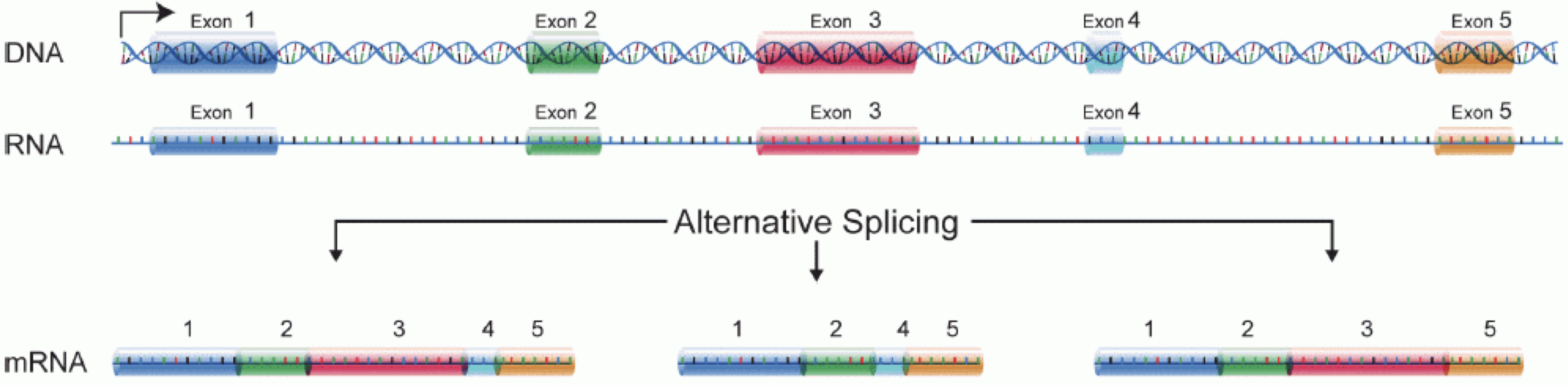
Image 1 of 1: ‘Illustration of part of the central dogma of molecular biology, where DNA is transcribed to RNA, and intronic sequences are spliced out’
Figure 2
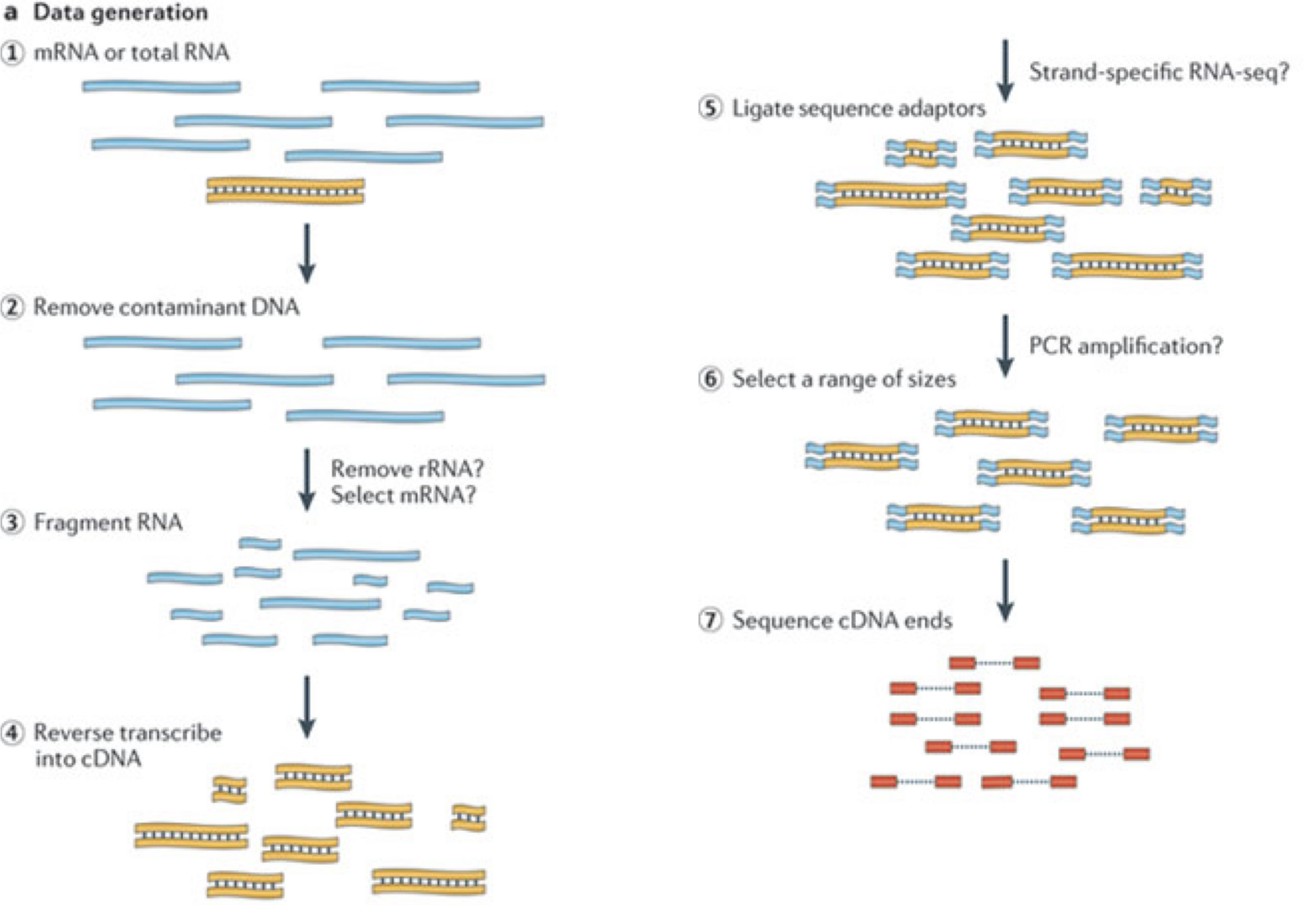
Image 1 of 1: ‘Illustration of the major experimental steps of an RNA-seq experiment’
Figure 3
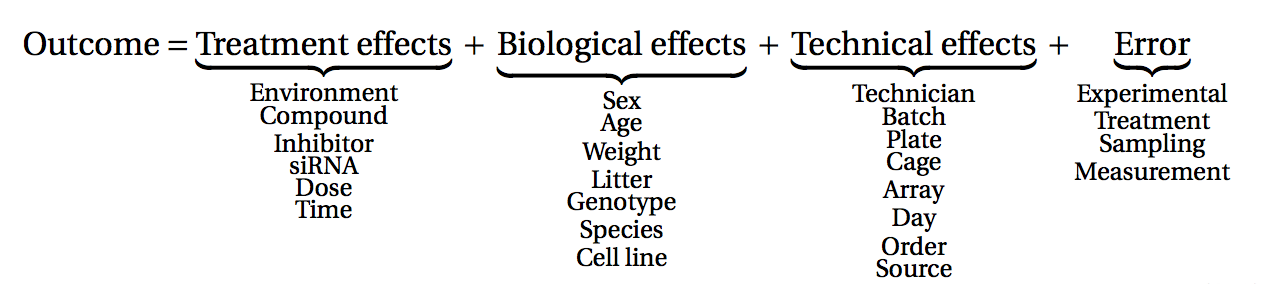
Image 1 of 1: ‘A classification of many different factors affecting measurements obtained from an experiment into treatment, biological, technical and error effects’
Figure 4
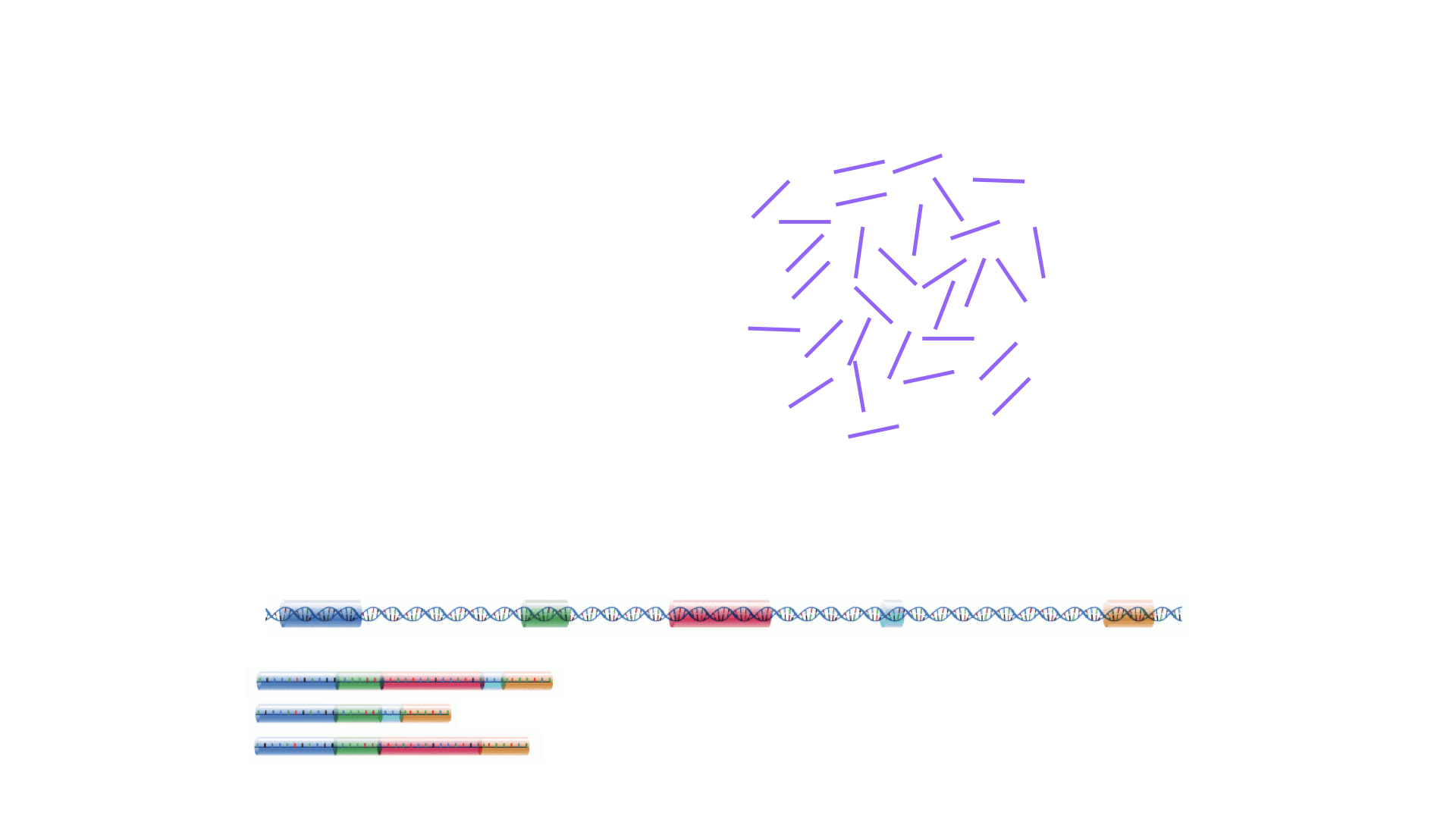
Image 1 of 1: ‘Illustration of a set of reads generated by a sequencer, and genomic and transcriptomic reference sequences’
Image 1 of 1: ‘Your output: mean quality per position for the 16 workshop FASTQ files (MultiQC)’
Your output: mean quality per position for the 16 workshop FASTQ files
(MultiQC)
Figure 2
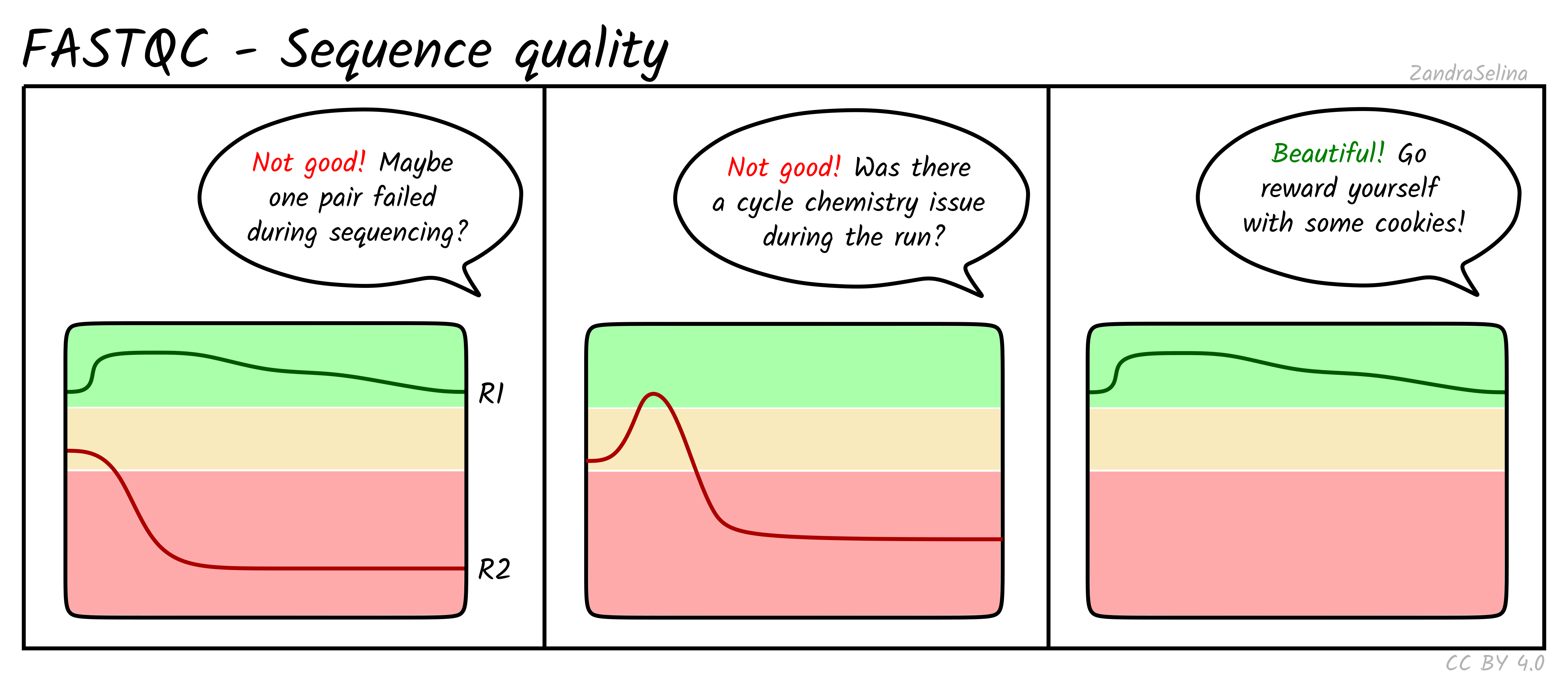
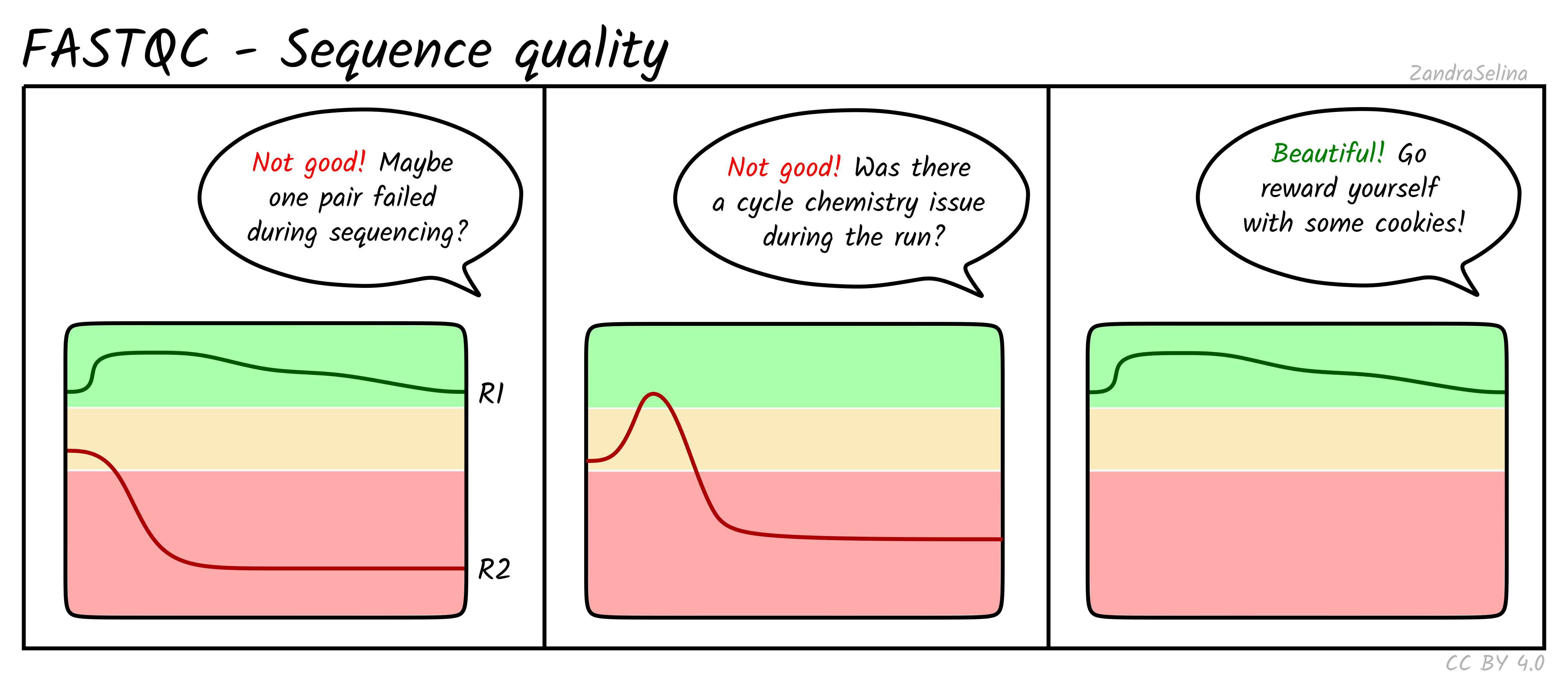
Image 1 of 1: ‘Three cartoon quality plots: read 2 quality collapsing while read 1 stays high, a short quality bump followed by a drop, and a stable high profile’
Contrast example, schematic and not data: one read of a pair failing, a
chemistry problem during the run, and a good profile. Cartoon by Zandra
Selina, CC BY 4.0.
Figure 3
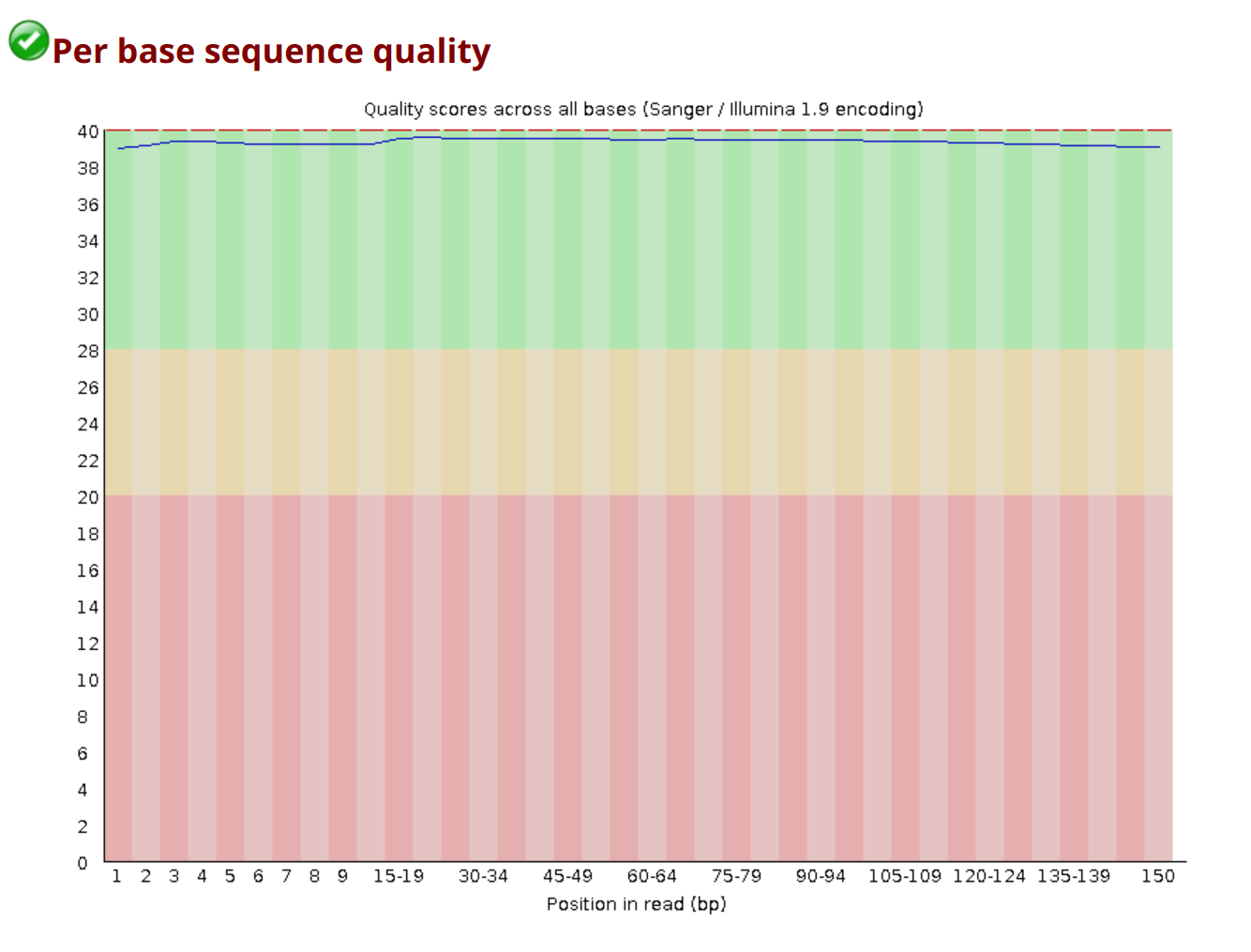
Image 1 of 1: ‘FastQC per base sequence quality plot from another dataset with 150 bp reads, mean quality flat near 39 for every position’
Contrast example from a different dataset (150 bp reads): per base
quality that stays near Q39 across the whole read, which is what an
excellent run looks like.
Figure 4
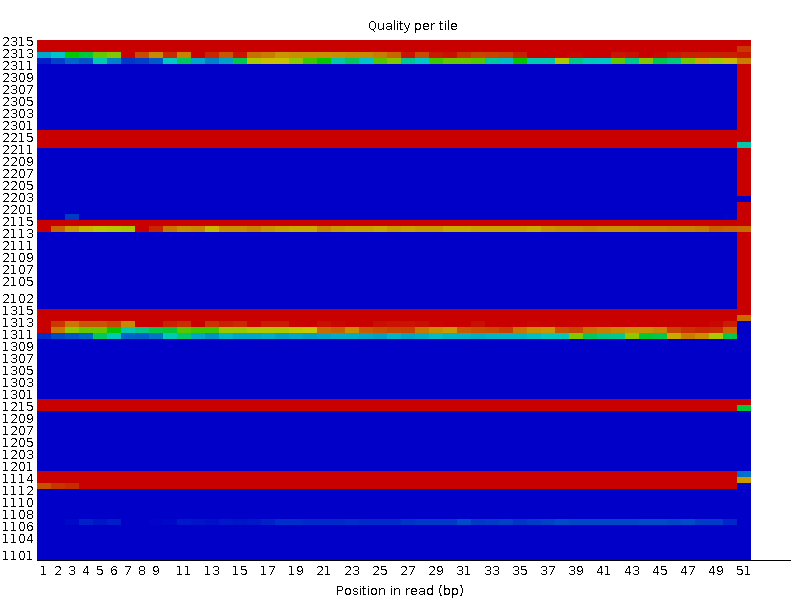
Image 1 of 1: ‘Your output: per tile sequence quality for WT_Bcell_IR_rep1_R1, one of the 12 files that fail this module’
Your output: per tile sequence quality for WT_Bcell_IR_rep1_R1, one of
the 12 files that fail this module
Figure 5
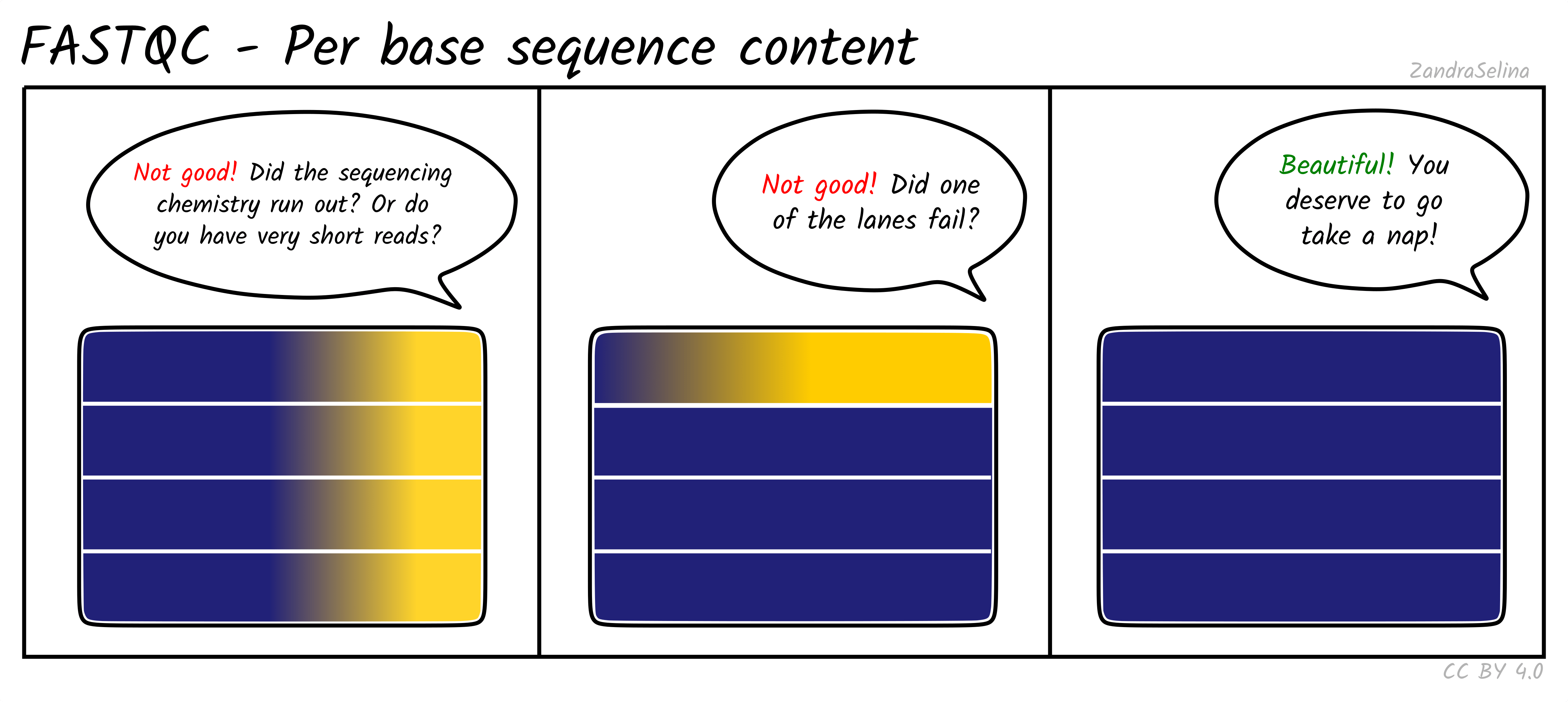
Image 1 of 1: ‘Three cartoon flowcell heat maps: all tiles turning yellow toward the end of the run, one lane yellow while the others stay blue, and all tiles blue’
Contrast example, schematic and not data: tile-level patterns, from
quality loss toward the end of the run on every tile, to a single failed
lane, to a clean flowcell. The cartoon is titled Per base sequence
content, but its panels show tile patterns. Cartoon by Zandra Selina, CC
BY 4.0.
Figure 6
Image 1 of 1: ‘Your output: per sequence quality scores for the 16 workshop FASTQ files (MultiQC)’
Your output: per sequence quality scores for the 16 workshop FASTQ files
(MultiQC)
Figure 7
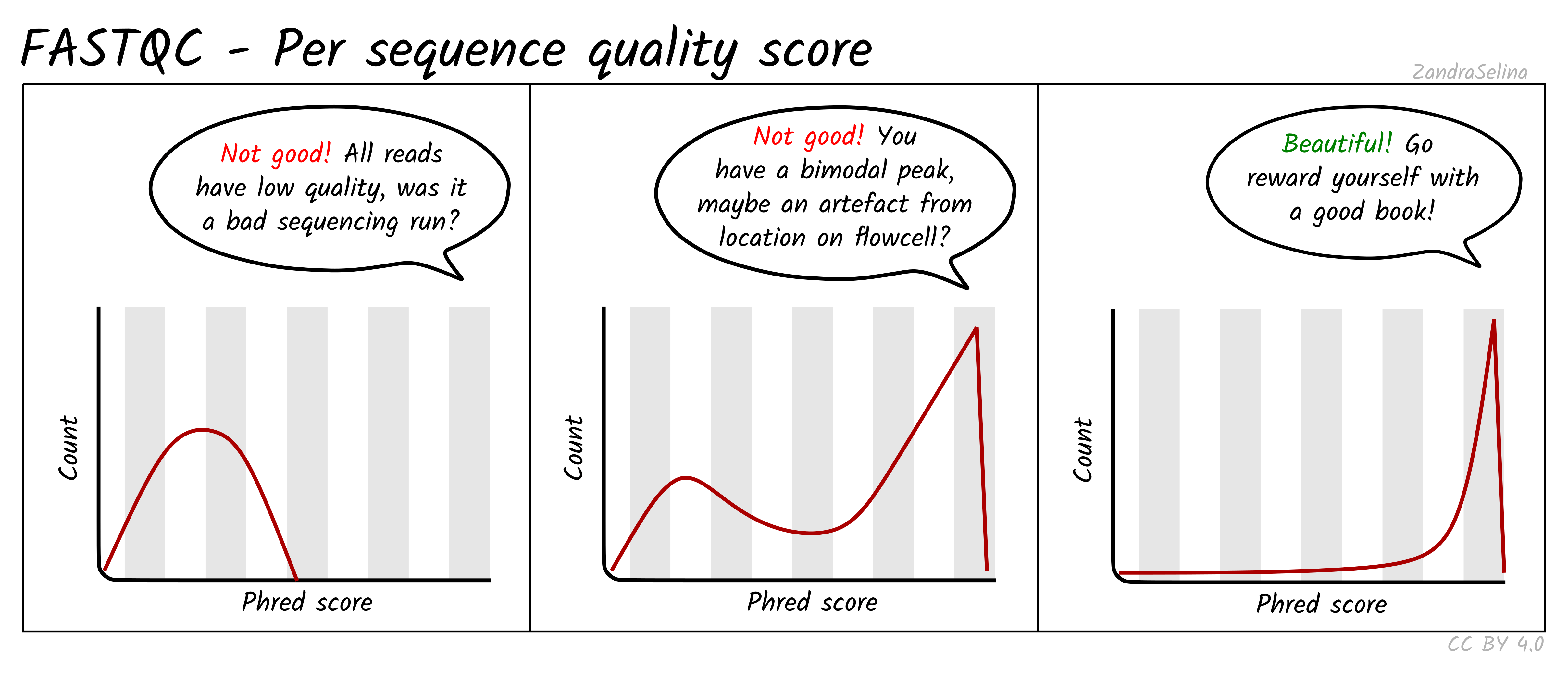
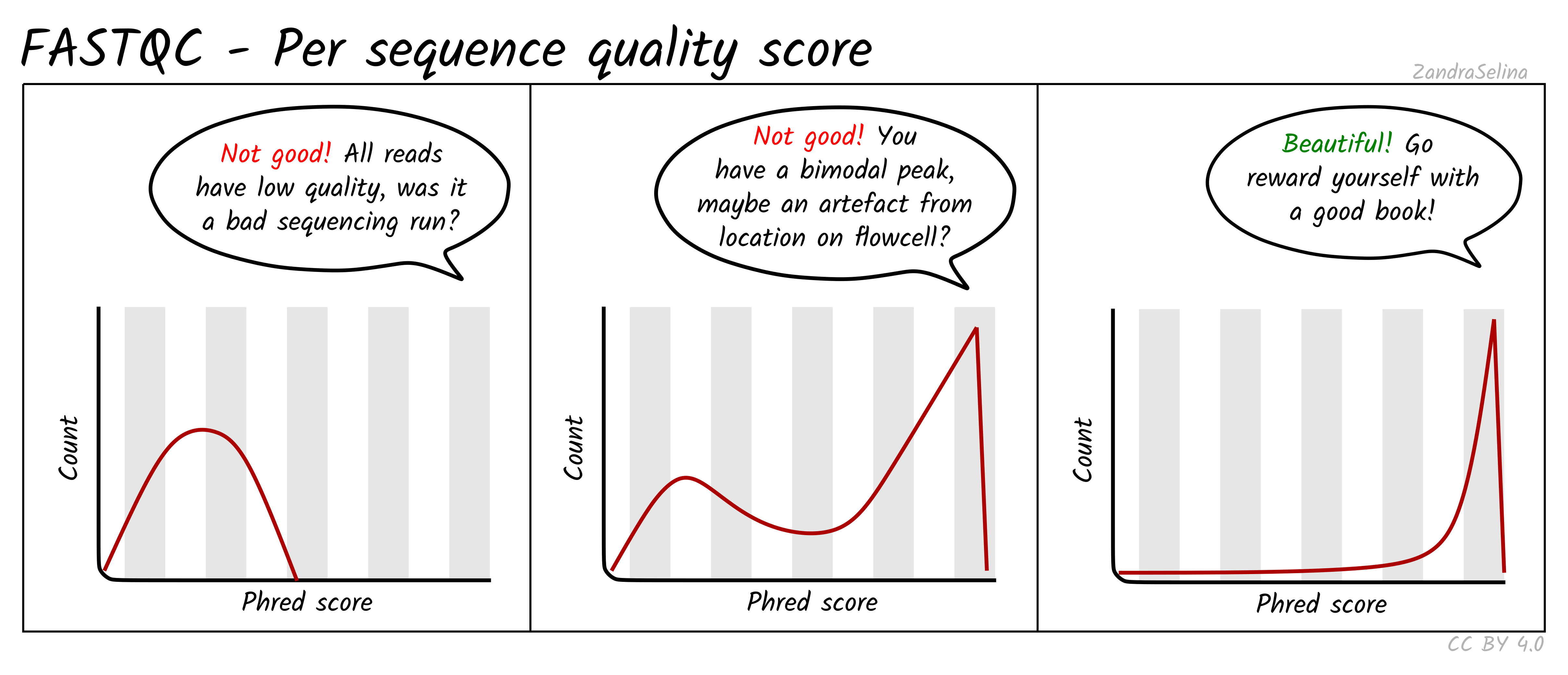
Image 1 of 1: ‘Three cartoon histograms of per read quality: a single peak at low quality, two peaks, and one sharp peak at high quality’
Contrast example, schematic and not data: most reads of low quality (a
bad run), a bimodal distribution (often a flowcell location artifact),
and a good single peak at high quality. Cartoon by Zandra Selina, CC BY
4.0.
Figure 8
Image 1 of 1: ‘Your output: per base sequence content for WT_Bcell_IR_rep3_R1’
Your output: per base sequence content for WT_Bcell_IR_rep3_R1
Figure 9
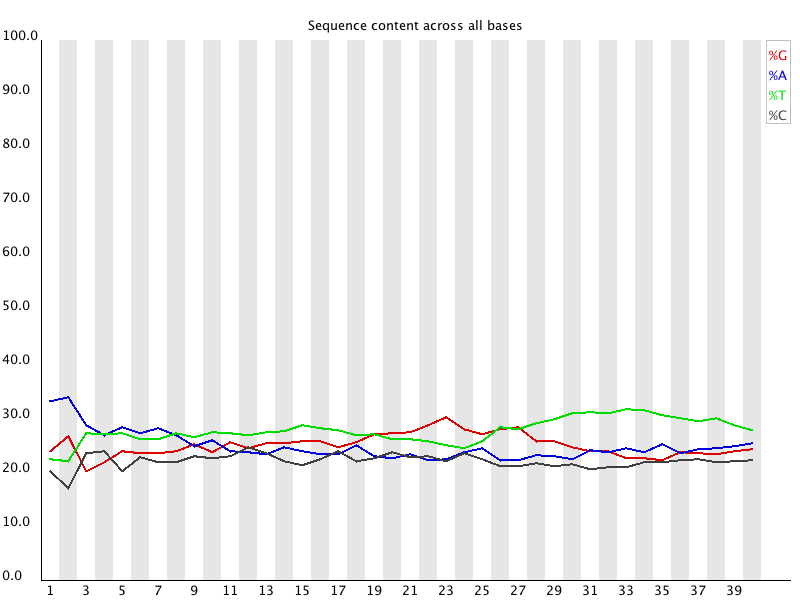
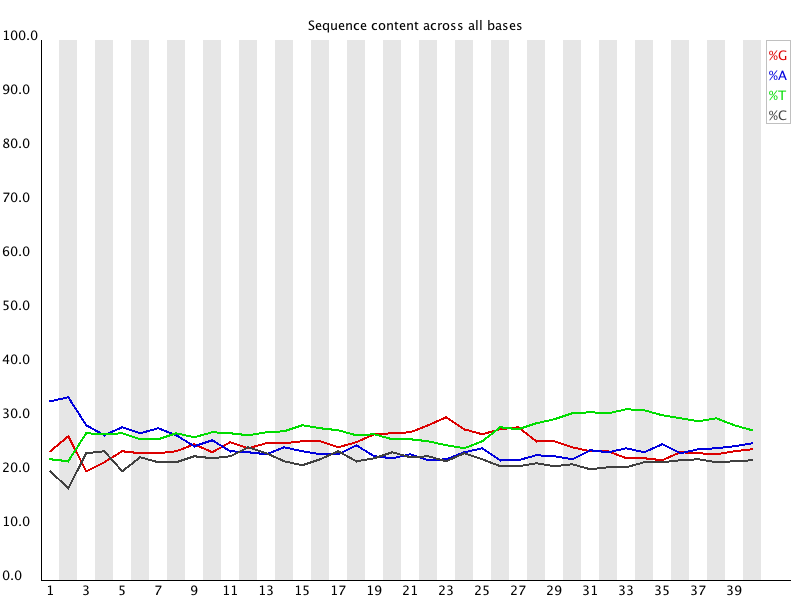
Image 1 of 1: ‘FastQC per base sequence content plot from another dataset with 40 bp reads, where the A, C, G, and T lines diverge in the first few cycles and then run nearly flat’
Contrast example from a different RNA-seq dataset (40 bp reads): the
same uneven base composition in the first cycles, caused by biased
priming. FastQC flags it, but it is normal for RNA-seq.
Figure 10
Image 1 of 1: ‘Your output: per sequence GC content for the 16 workshop FASTQ files (MultiQC)’
Your output: per sequence GC content for the 16 workshop FASTQ files
(MultiQC)
Figure 11
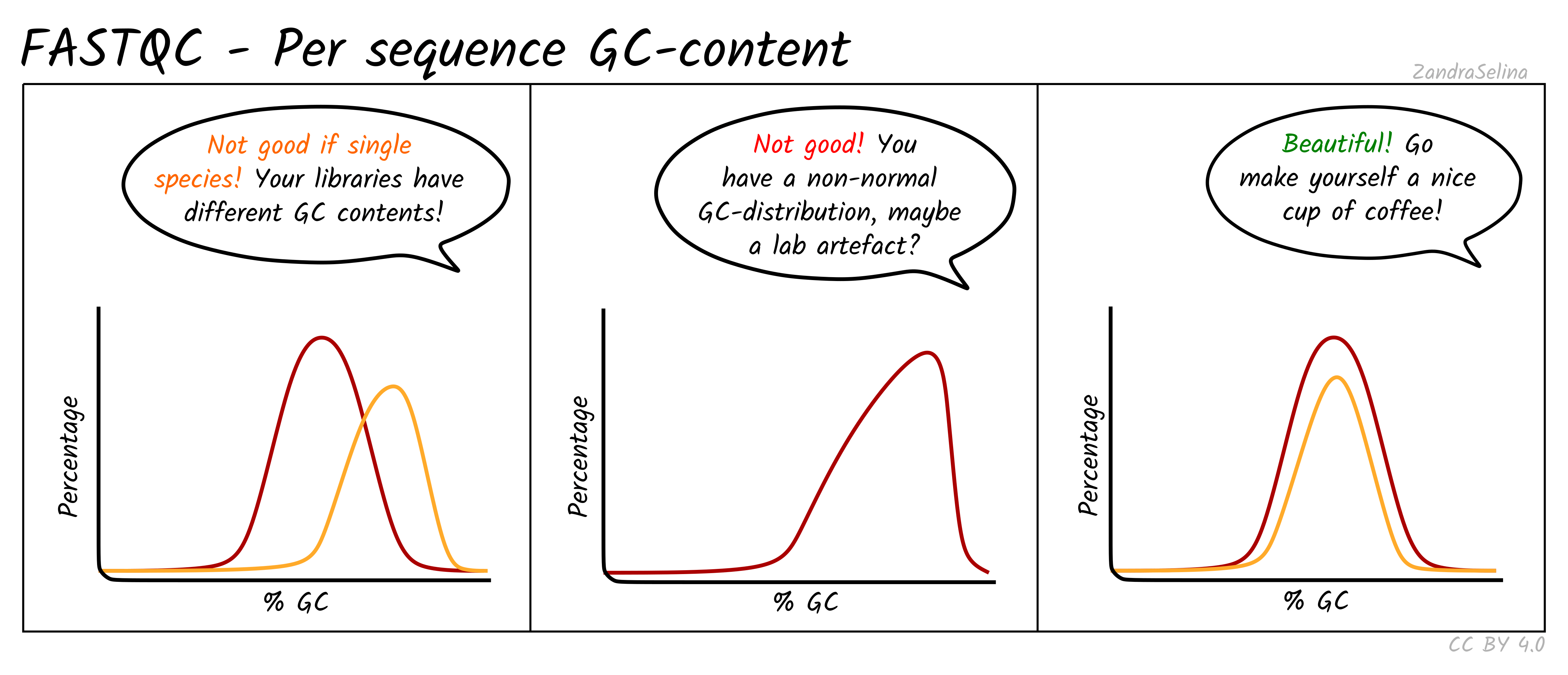
Image 1 of 1: ‘Three cartoon GC content plots: two shifted peaks, one skewed peak, and an observed peak matching the expected curve’
Contrast example, schematic and not data: libraries with different GC
content (fine across species, a warning within one), a non-normal
distribution that suggests a lab artifact, and a good match to the
expected curve. Cartoon by Zandra Selina, CC BY 4.0.
Figure 12
Image 1 of 1: ‘Your output: per base N content for the 16 workshop FASTQ files (MultiQC)’
Your output: per base N content for the 16 workshop FASTQ files
(MultiQC)
Figure 13
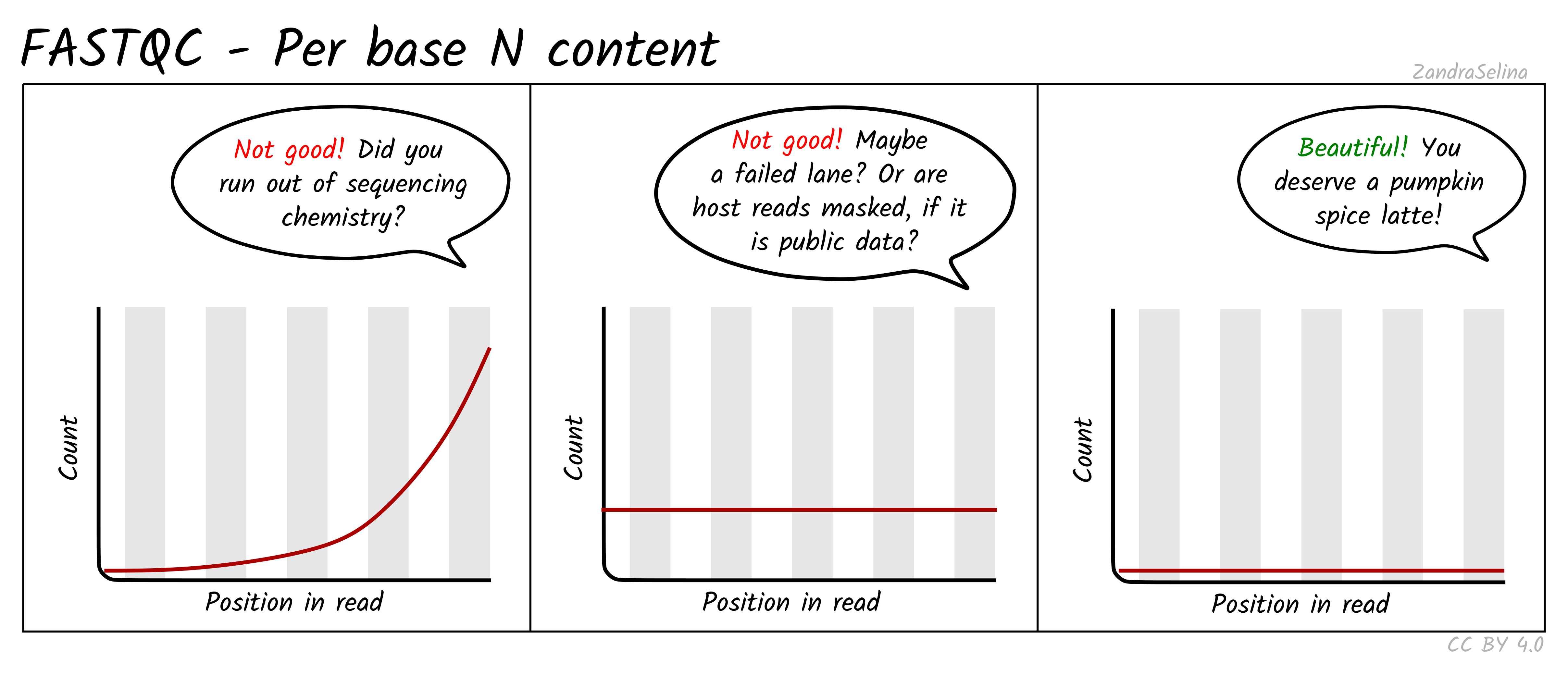
Image 1 of 1: ‘Three cartoon N content plots: a curve rising at the end of the read, a flat line above zero, and a flat line at zero’
Contrast example, schematic and not data: N bases rising toward the end
of the read (chemistry running out), a constant N level (a failed lane
or masked reads), and no N bases. Cartoon by Zandra Selina, CC BY 4.0.
Figure 14
Image 1 of 1: ‘Your output: sequence length distribution for WT_Bcell_IR_rep3_R1, where every read is 51 bp’
Your output: sequence length distribution for WT_Bcell_IR_rep3_R1, where
every read is 51 bp
Figure 15
Image 1 of 1: ‘FastQC sequence length distribution from another dataset, a single sharp peak at 150 bp’
Contrast example from a different dataset sequenced with 150 bp reads:
still a single narrow peak, only at a different read length. Nothing is
wrong here; a broad distribution would point to trimming or a small RNA
protocol.
Figure 16
Image 1 of 1: ‘Your output: sequence duplication levels for the 16 workshop FASTQ files (MultiQC)’
Your output: sequence duplication levels for the 16 workshop FASTQ files
(MultiQC)
Figure 17
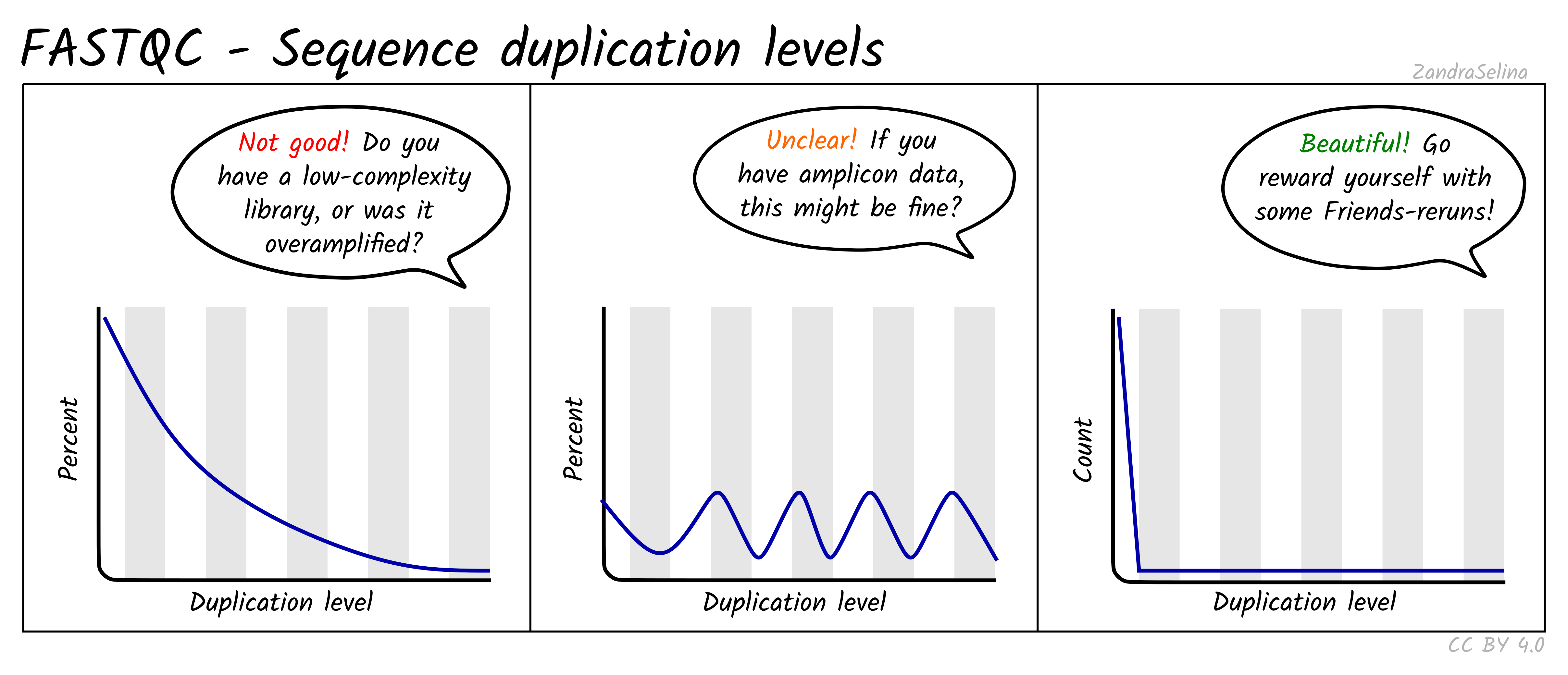
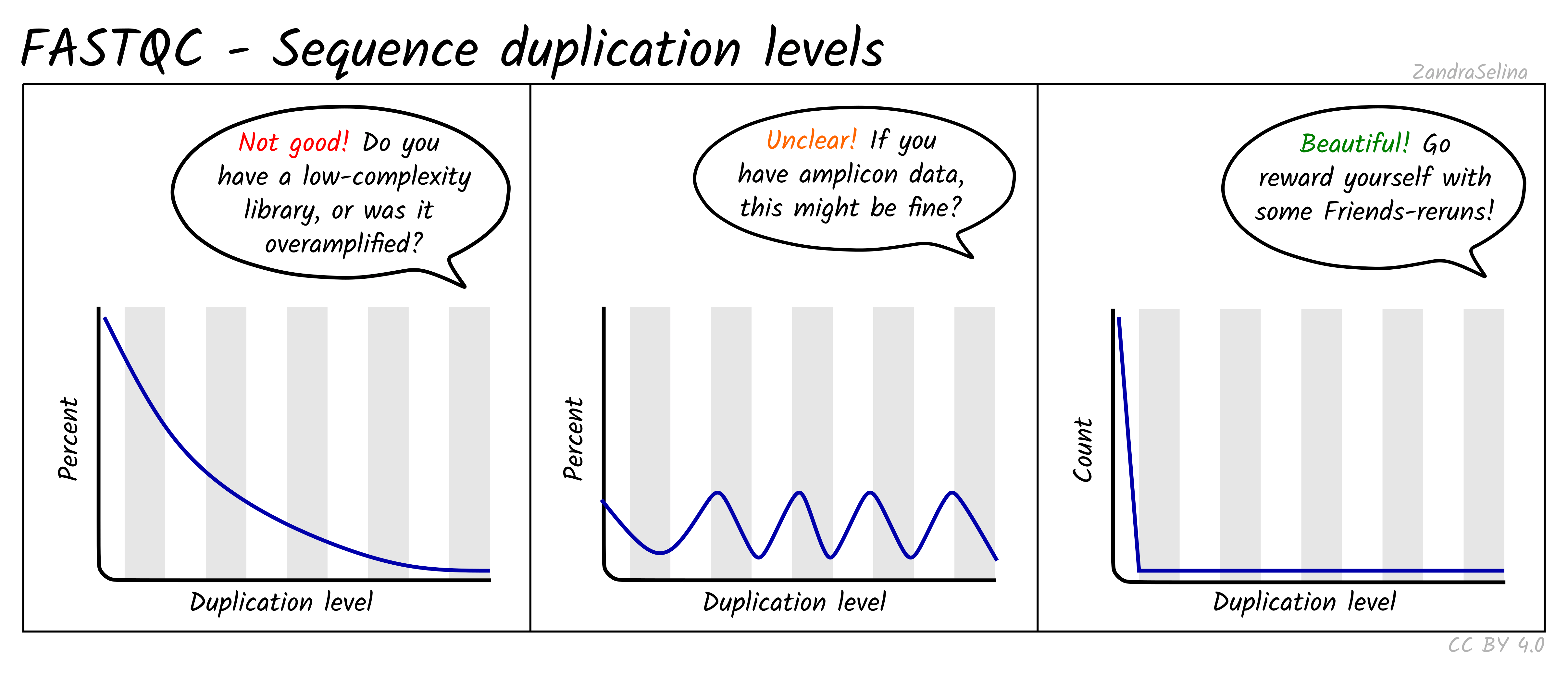
Image 1 of 1: ‘Three cartoon duplication plots: a slowly decaying curve, a wavy pattern, and a single spike at duplication level one’
Contrast example, schematic and not data: high duplication from a
low-complexity or over-amplified library, a periodic pattern that can be
fine for amplicon data, and a library dominated by unique reads. Cartoon
by Zandra Selina, CC BY 4.0.
Figure 18
Image 1 of 1: ‘Your output: adapter content for the 16 workshop FASTQ files (MultiQC)’
Your output: adapter content for the 16 workshop FASTQ files (MultiQC)
Figure 19
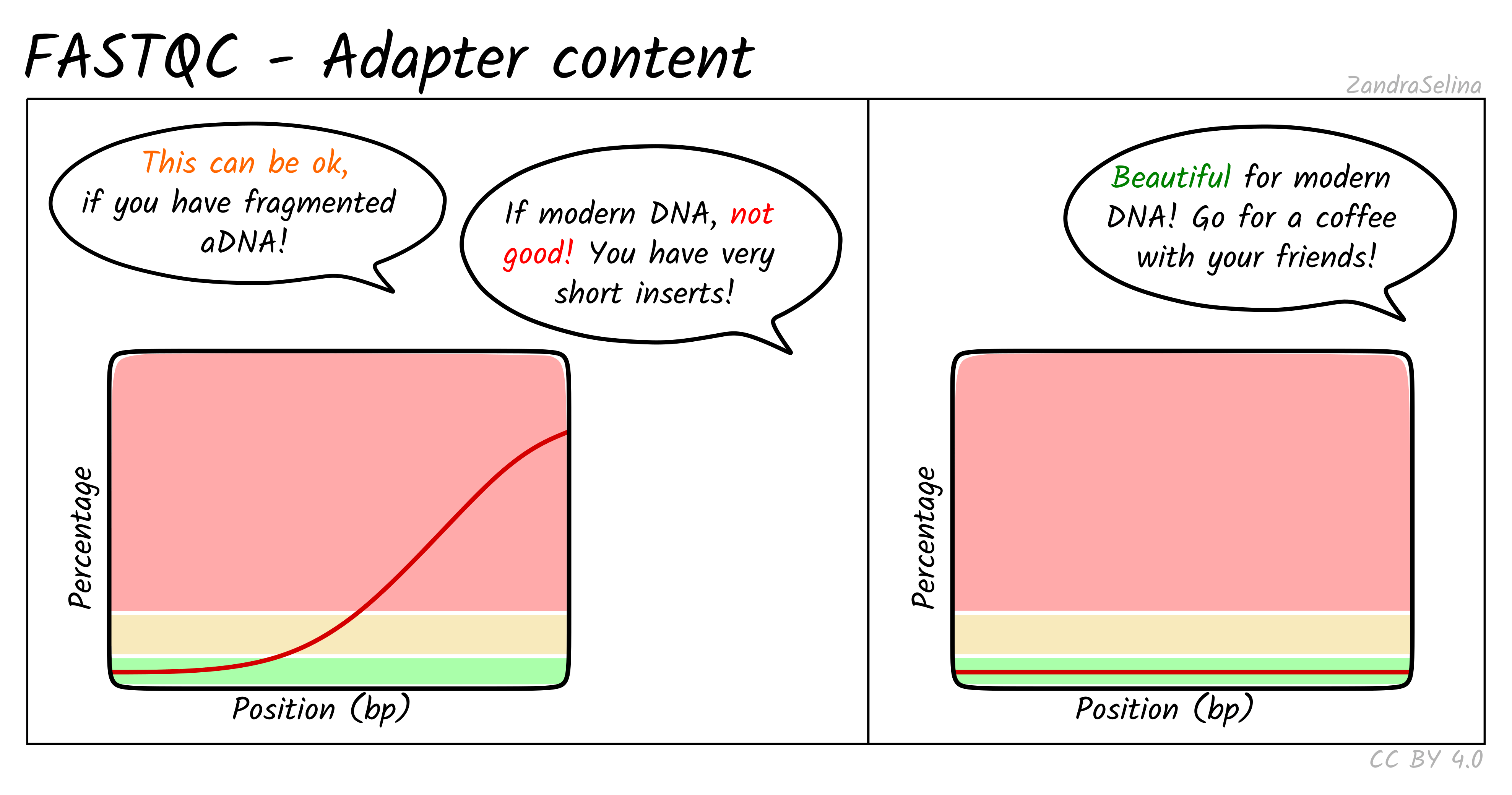
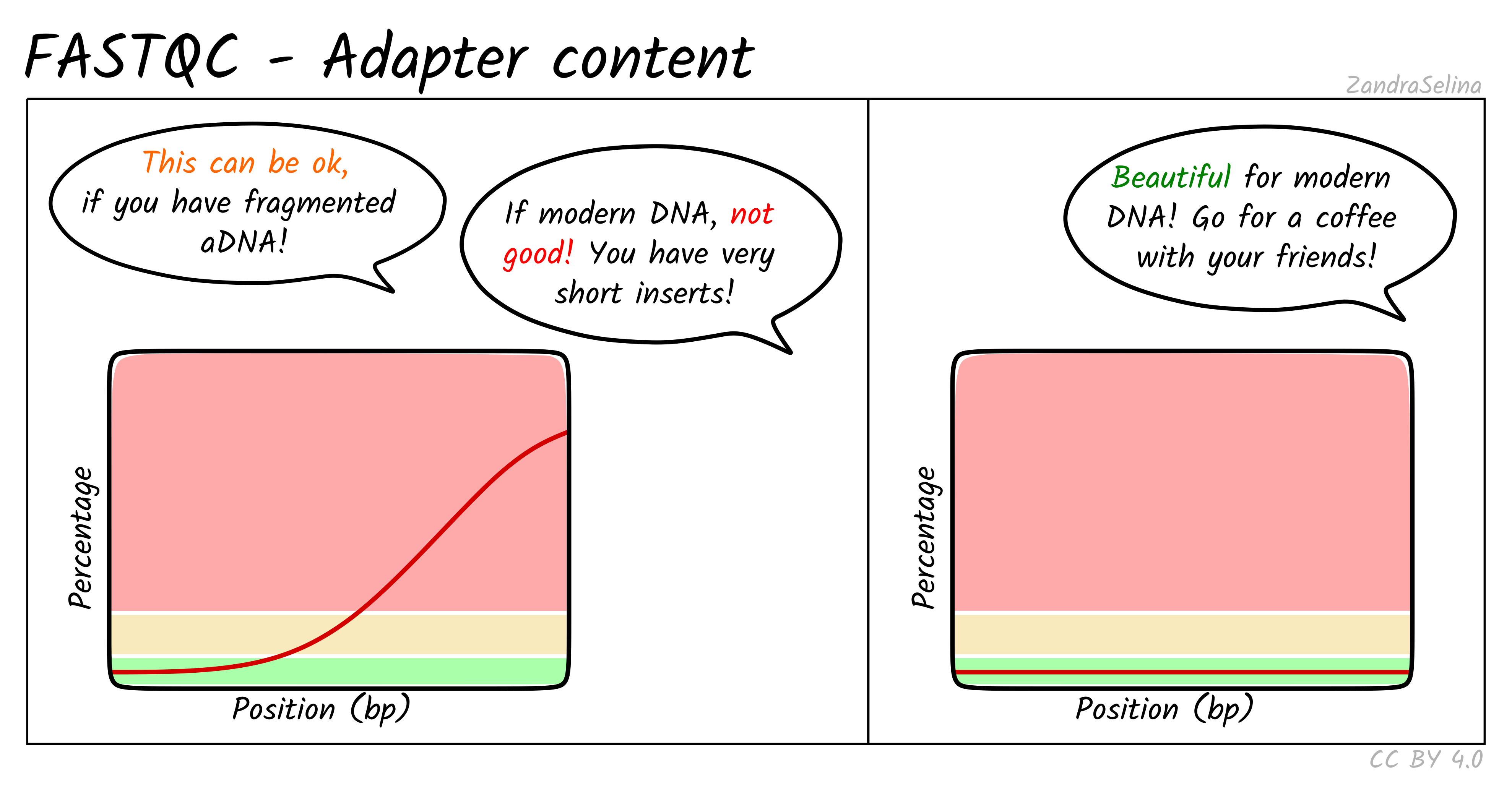
Image 1 of 1: ‘Two cartoon adapter content plots: a curve rising toward the end of the read, and a flat line at zero’
Contrast example, schematic and not data: adapter content rising toward
the read end (short inserts, acceptable only for fragmented ancient DNA)
and a flat line near zero. Cartoon by Zandra Selina, CC BY 4.0.
Figure 20
Image 1 of 1: ‘Your output: MultiQC summary of the FastQC status checks for the 16 workshop FASTQ files’
Your output: MultiQC summary of the FastQC status checks for the 16
workshop FASTQ files
Figure 21
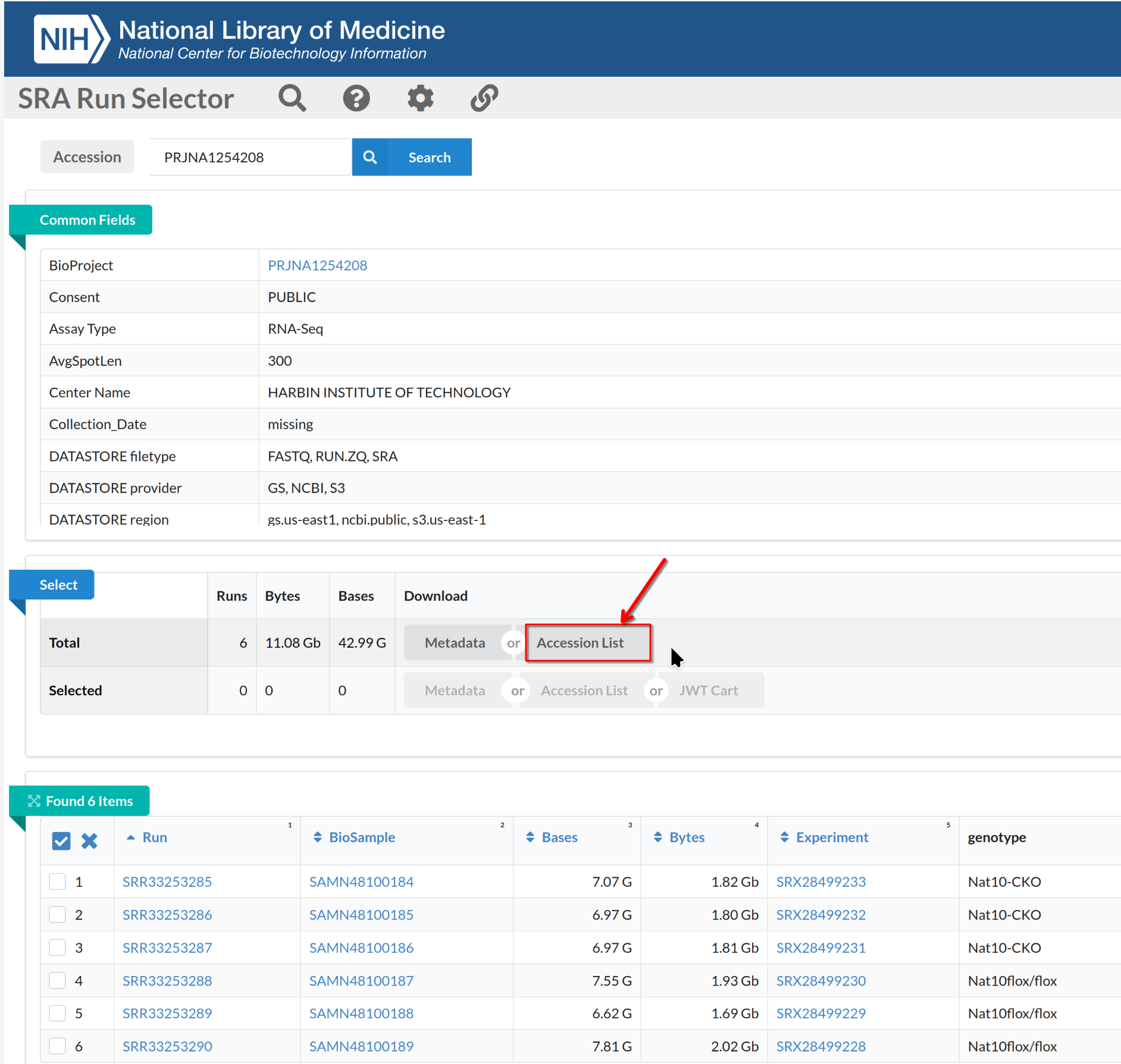
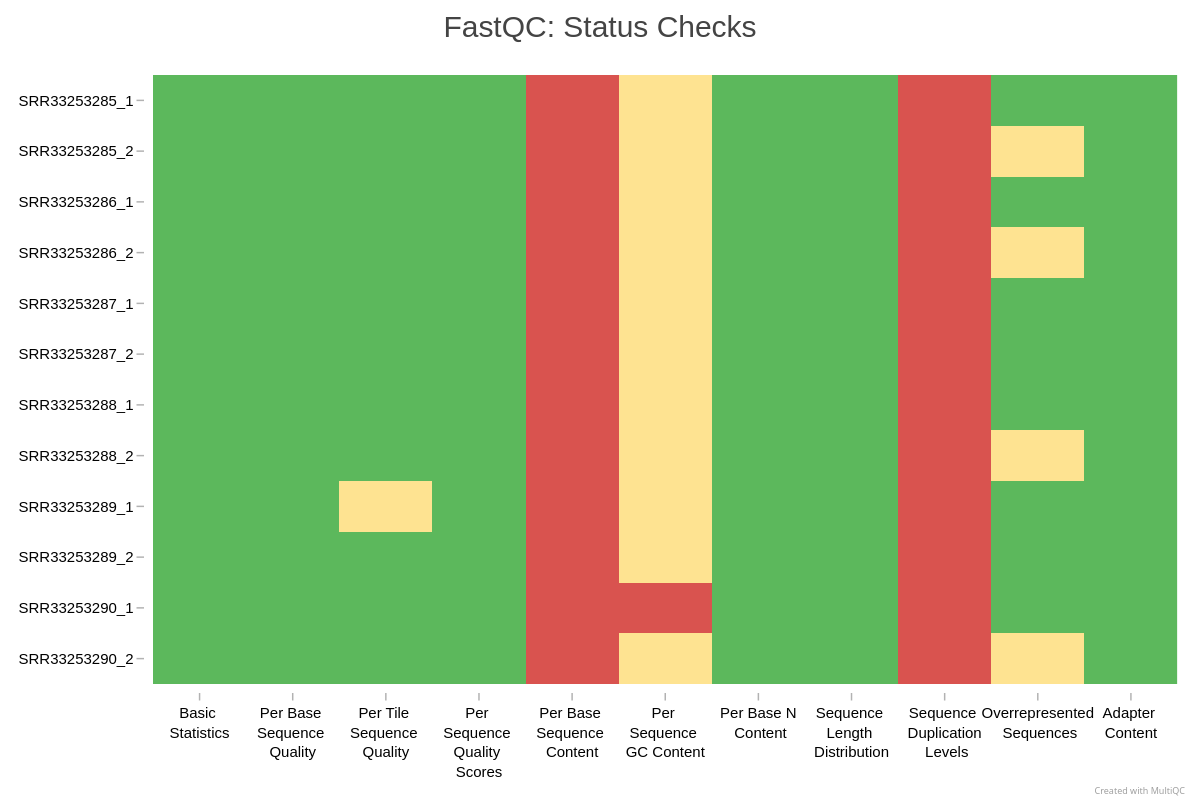
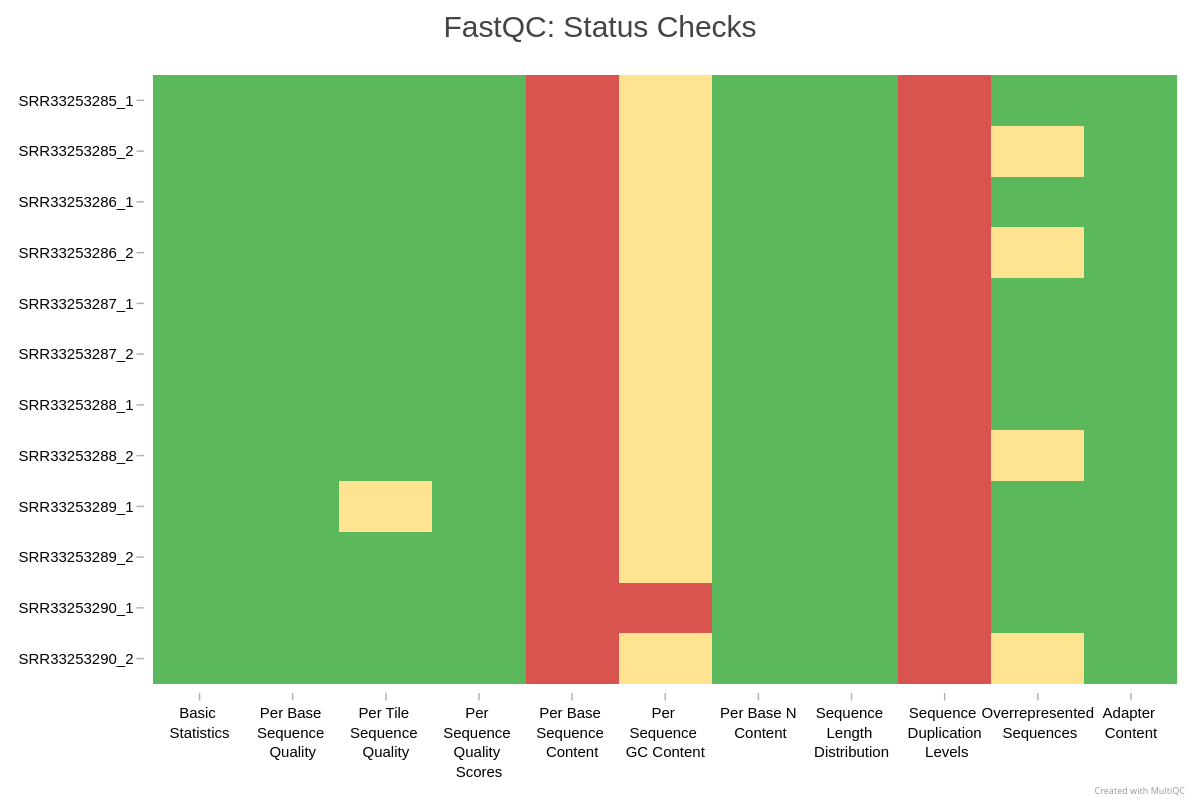
Image 1 of 1: ‘MultiQC FastQC status heat map from another dataset with six runs, where the per base sequence content and sequence duplication columns are red for every file and most other columns are green’
Contrast example from a different dataset (runs SRR33253285 to
SRR33253290): per base sequence content and sequence duplication fail in
every file. In RNA-seq both are common and are not by themselves a
reason to discard data; read the plots, not only the colors.